

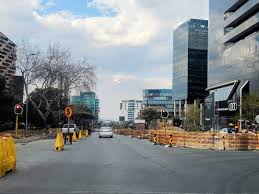
As Johannesburg gets set to host the G20 Summit in November 2025, the city is turbocharging its infrastructure—most notably the iconic M1 freeway, a major arterial route connecting Sandton and the city center—to ensure smooth traffic flow and a polished urban image.
Revamping the M1: More Than Just a Driveway
The M1, stretching nearly 30 km from Meredale through the city center and reaching into Sandton and beyond, is a critical lifeline for Johannesburg’s transport system Wikipedia. With the G20 drawing global leaders and dignitaries through these corridors, the City of Johannesburg has launched a targeted infrastructure overhaul focused on:
-
Resurfacing and patching potholes
-
Fixing broken or vandalized traffic lights
-
Installing adaptive traffic signal systems
-
Implementing enhanced signage and CCTV surveillance
-
Prioritizing seamless convoy routes for incoming delegations BusinessLIVETimesLIVESABC NewsGauteng
Where’s the Money Coming From?
To get the roads summit-ready, Gauteng has committed R1.5 billion for rapid road repairs. Despite this, only 35% of provincial roads are currently in good condition—that still leaves a long list of problem areas to be addressed townpress.co.za.
Meanwhile, repairing and maintaining traffic signals is also expensive. The Johannesburg Roads Agency (JRA) has taken on an additional 275 provincial intersections—on top of the 2,023 already under its purview—to smooth traffic flow BusinessLIVE.
Politics of Potholes: Prioritizing G20 Routes Sparks Debate
Mayor Dada Morero made headlines when he stated the city would prioritize roads being used by G20 delegates:
“We have prioritised certain routes within Johannesburg which are G20 routes… No potholes, no traffic signals that are not working.” TimesLIVEThe South African
The public backlash was swift, accusing the city of neglecting ordinary residents. Morero later backtracked, clarifying that infrastructure improvements would span the entire city—not just the most visible routes IOLEWN.
Beyond Roads: A Comprehensive Citywide Reset
Joburg’s G20 readiness extends beyond tarmac and traffic lights. The Gauteng government is also:
-
Rolling out community clean-up initiatives, including the Main Street effort led by GGT2030, to spruce up public spaces Gauteng
-
Installing CCTV at key intersections—initially eight cameras, expanding to sixteen—for enhanced surveillance and safety SABC News
-
Coordinating security, lighting, and signage upgrades across summit venues like Sandton Convention Centre, Nasrec Expo Centre, and Melrose Arch EWNSABC News
What Locals Are Saying
Public sentiment has been mixed. Residents lamented being reduced to “second‑class citizens,” and civic forums labeled the upgrades “spit and polish” while deeper governance issues persist The TimesReddit.
A resident shared frustration on Reddit:
“We literally have potholes on the N1 between Pretoria and JHB… wtf are they doing?”
“That’s embarrassing. We are fixing routes to the G20 so those roads aren’t as fucked up as the rest of the country.” Reddit
The Final Stretch: Will It Be Enough?
With just months before the summit, officials remain confident. Morero affirmed that infrastructure challenges are being addressed—and that Johannesburg will be ready to host the world EWN.
Still, many argue that the true success of Joburg’s G20 preparations depends on whether the improvements leave a lasting impact—or just a momentary facelift.
At a Glance: Key Highlights
| Focus Area | Actions Taken |
|---|---|
| Road Infrastructure | R1.5 billion allocated; repairs on key M1 segments and other arterial routes |
| Traffic Management | Repairs and upgrades of up to 275 new signal intersections by JRA |
| Public Spaces | Bot-led clean-ups and community beautification efforts |
| Security & Systems | CCTV, signage, and lighting enhancements around summit venues |
| Public Sentiment | Criticism of one-off fixes; calls for long-term infrastructure overhaul |
Johannesburg’s push to revamp the M1 and its surroundings shows its ambition to rise to a global stage. As the world turns its eyes toward South Africa this November, the city’s true test will be in delivering a meaningful—and inclusive—legacy.